From YouTube to You: The Incredible Journey of Data Packets Across the Internet
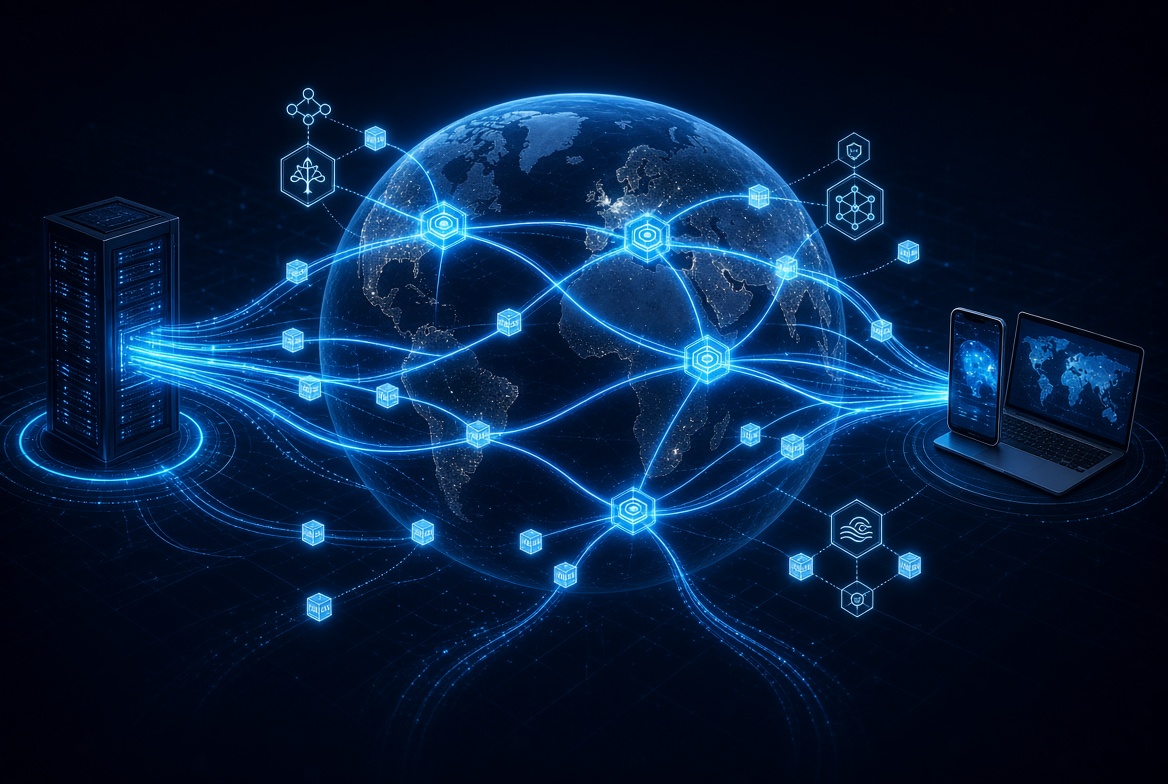
Imagine you tap play on a YouTube video. Within a second or two, the image and sound appear on your phone or computer. Behind that simple action lies one of the most remarkable systems humans have built: a global network that breaks your video into millions of tiny pieces, ships them across continents (sometimes through undersea cables and satellites), and reassembles them perfectly on your screen—often in just a few dozen milliseconds.
Here's how it works, without the technical jargon.
Data Travels in Tiny Envelopes Called Packets
Any digital content—a video, a webpage, a message—is first chopped into small chunks called packets. Think of a long letter written on hundreds of index cards. Each card (packet) carries:
- A piece of the actual content
- The “to” address (your device’s location on the internet)
- The “from” address (YouTube’s servers)
- Sequencing numbers so everything can be put back in the right order
- Error-checking information so damaged pieces can be resent
A single high-definition video stream can involve thousands of these packets every second. A popular video watched by millions of people generates billions of packets racing around the world at the same time.
Finding the Way: Like a Global Postal System with Super-Smart Sorting Offices
The internet is not one giant wire. It is a vast web of connected networks owned by different companies, universities, governments, and cloud providers. Connecting them are specialized computers called routers.
Routers act like highly efficient postal sorting offices. When a packet arrives, the router looks at the destination address and consults its internal “map” (called a routing table) to decide the best next hop. It doesn’t need to know the entire journey—just the next step that moves the packet closer to its goal.
These maps are constantly updated. Networks share information about which paths are open, congested, or broken using standardized protocols. If a major cable is cut or a route becomes overcrowded, traffic automatically shifts to alternate paths within seconds. The system is designed to be resilient.
The Secret Languages Routers Speak: Routing Protocols
Routers can’t just guess the best path—they need a way to learn about the network and keep their maps current. That’s where routing protocols come in. These are the specialized “languages” routers use to talk to one another and exchange information about available routes.
There are two main kinds of conversations happening:
Inside a single network (for example, within your internet provider’s systems or a big company’s private network), routers use interior protocols. One of the most common is called OSPF (Open Shortest Path First). Think of it like a team of delivery drivers constantly radioing each other about traffic conditions and road closures so everyone can pick the fastest local route. These protocols focus on finding the quickest or most efficient path within their own territory and can react very quickly to changes.
Between different networks (the big connections that link internet providers, cloud companies, and content providers across the globe), the dominant language is BGP (Border Gateway Protocol). BGP is often called “the language of the internet.” It doesn’t just care about the shortest path—it also considers business relationships, policies, and agreements between companies. Imagine different countries negotiating which border crossings and highways their trucks are allowed to use. BGP lets networks announce which destinations they can reach and under what conditions, so traffic flows according to both technical efficiency and real-world agreements.
These protocols run quietly in the background all day long. When a new cable comes online, a router fails, or a path becomes congested, the routers share the news and update their maps—often within seconds or minutes. The result is a living, breathing system that continuously recalculates the best ways for packets to travel.
A Real Example: Your YouTube Video
- You hit play. Your device sends a request to YouTube.
- YouTube (or its content delivery network) responds. Popular videos are stored in many locations around the world in special servers called edge caches or CDNs (Content Delivery Networks). The system tries to send you the video from a server geographically close to you—often in the same city or region—so the trip is shorter.
- Packets leave the server. Each packet is handed to the local network’s routers.
- Across the backbone. Packets travel over high-capacity fiber-optic cables (including undersea cables that cross oceans). At each major junction, routers examine the destination and forward the packet onward, guided by the information learned through routing protocols.
- Into your internet provider’s network. Once the packets reach your ISP (the company that provides your home or mobile internet), they are steered toward the local equipment that serves your neighborhood or cell tower.
- Last hop to your device. Your home router or the cellular network delivers the packets to your phone or computer.
- Reassembly. Your device puts the packets back in order, checks for missing pieces, and displays the video. Buffering is simply the player waiting for enough packets to arrive so playback stays smooth.
The entire round trip—from your tap to the first video frames appearing—often takes less time than the blink of an eye.
How Millions of Packets Move So Fast Between Millions of Devices
Several clever design choices make this scale possible:
- Parallelism — Packets from the same video (and from countless other users) travel independently and can take slightly different routes. They don’t wait in a single line.
- Shortest reasonable path — Routing algorithms favor fast, uncongested routes. Modern networks also use techniques that measure real-time performance and steer traffic accordingly.
- Locality through caching — By storing popular content closer to users, the internet avoids hauling the same video across an ocean millions of times.
- Massive capacity and redundancy — Fiber cables can carry enormous amounts of data. Critical links have backups. The system is built so that no single failure stops everything.
- Hierarchy — Local networks handle local traffic. Only traffic that truly needs to go far travels the long-haul backbone. This keeps the core of the internet from being overwhelmed.
The result is a system that routinely moves more data in a day than all the books ever written, while still delivering a cat video to your phone in under a second.
The Quiet Miracle
Most of us never think about the routers, undersea cables, or routing decisions happening every time we stream a video, send a message, or load a webpage. Yet every day the internet quietly coordinates the movement of trillions of packets among billions of devices with astonishing reliability and speed.
The next time a video starts playing almost instantly, you’re witnessing one of the greatest engineering achievements of our time—an invisible, global postal system that somehow works at the speed of light.