Unlock the Web Safely: How VPNs Shield Your Online Life (and When They Fall Short)
In an age where every click, search, and stream leaves a digital footprint, connecting to the internet without protection feels increasingly risky. A Virtual Private Network, or VPN, has become one of the most popular tools for reclaiming some control. By routing your traffic through an encrypted tunnel to a remote server, a VPN masks your real IP address, encrypts data in transit, and can unlock content restricted by geography. This article explains how people connect using commercial VPN providers, why they bother, what the leading services actually deliver in terms of security and anonymity, and the practical downsides that often get glossed over in marketing.
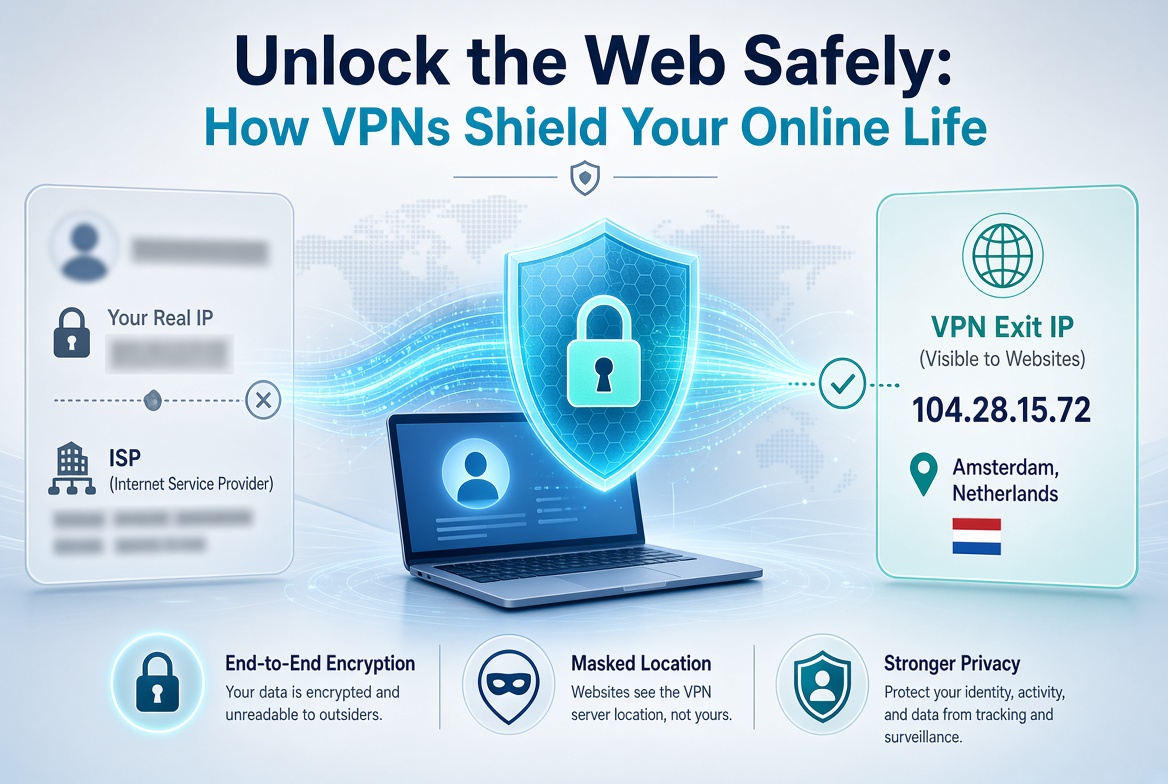
How Connecting Through a VPN Works
Using a VPN is straightforward once you understand the basic flow. You download the provider’s app or client software (available for Windows, macOS, Linux, Android, iOS, and many routers), create an account, log in, and select a server location. With one click the client establishes an encrypted connection—typically using modern protocols such as WireGuard or OpenVPN—to a server operated by the VPN company. From that moment, your internet traffic leaves the server’s IP address rather than your own. Websites, your ISP, and many surveillance systems see only the VPN provider’s address.
Most reputable providers offer kill switches that cut the internet connection if the VPN drops, DNS leak protection to stop your real DNS queries from escaping, and split-tunneling options so you can route only certain apps through the tunnel. Setup on mobile devices is usually even simpler: install the app, log in, and toggle the connection. Router-level installation is possible for whole-home coverage but requires more technical comfort.
Why People Reach for a VPN
The motivations fall into a few clear categories. Privacy-conscious users want to stop their internet service provider from logging every site they visit and selling that data or handing it over under legal pressure. Travelers and remote workers use VPNs to access company resources or home-country streaming libraries while abroad. People living under restrictive regimes or working in sensitive fields value the ability to bypass local censorship and surveillance. Gamers sometimes connect to lower-latency or region-specific servers. Journalists, activists, and anyone handling confidential information treat the encryption layer as basic operational security. Finally, many simply prefer not to have their browsing habits permanently tied to their real identity and location.
Security, Anonymity, and Protection Offered by Major Providers
Leading commercial VPNs market themselves on three pillars: strong encryption, a no-logs policy, and a large server network. Encryption standards are now largely table stakes—AES-256 and ChaCha20 are common, and modern protocols make the connection resistant to casual interception on public Wi-Fi or by network operators.
Anonymity is more nuanced. A VPN hides your IP from the websites you visit and from your ISP, but the VPN provider itself can see your real IP and the destinations you reach. True anonymity therefore depends on the provider’s willingness and ability to keep no identifiable logs. Independent audits have become a key differentiator.
Among the better-known providers:
- NordVPN operates a large global network, offers a double-hop “Onion over VPN” feature, and has undergone multiple third-party audits of its no-logs claims. It includes threat-protection tools that block malware and trackers.
- ExpressVPN is frequently praised for speed and a reliable kill switch. It maintains servers in many jurisdictions and has a history of cooperating with independent auditors.
- Surfshark emphasizes unlimited simultaneous connections and a clean, affordable interface, making it popular with households that share one subscription.
- ProtonVPN (from the makers of Proton Mail) stands out for its open-source clients, strict Swiss jurisdiction, and a free tier that still offers decent speeds and privacy features. It appeals to users who prioritize transparency.
- CyberGhost and Private Internet Access (PIA) target users who want specialized streaming servers or very large server counts at lower price points.
These services generally protect against common threats on untrusted networks: man-in-the-middle attacks on public Wi-Fi, ISP-level tracking, and basic IP-based geoblocking. None of them, however, make you invisible to a determined adversary with legal or technical resources. A VPN encrypts the pipe; it does not encrypt the endpoints. If you log into a personal account, that service still knows who you are.
The Drawbacks Nobody Advertises
Despite the marketing, VPNs are not magic cloaks. Setup can require more expertise than many users expect. Choosing the right protocol, configuring a router, troubleshooting leaks, or verifying that the kill switch actually works demands a level of technical literacy that casual users may lack. Free or cheap services often log aggressively, inject ads, or sell bandwidth—sometimes turning the “protection” into a new risk.
Performance is another frequent complaint. Even well-optimized providers introduce some latency and can throttle speeds on distant servers. Streaming services and some websites actively detect and block known VPN IP ranges, forcing users into a constant cat-and-mouse game of server hopping. Jurisdiction matters: a provider based in a country with mandatory data-retention laws or close intelligence alliances may be compelled to retain or hand over information despite public no-logs claims.
Finally, a VPN concentrates trust. Instead of trusting your ISP, you now trust a private company—often with a complex ownership structure—to handle your entire traffic stream. If that company is compromised, suffers a breach, or changes its policy, the protection evaporates. Over-reliance on a VPN can also create a false sense of security that leads people to ignore other basic practices such as strong unique passwords, two-factor authentication, and careful link hygiene.
Summary
A commercial VPN remains one of the simplest and most effective ways for ordinary users to encrypt their internet traffic, hide their IP address from websites and ISPs, and regain access to geographically restricted content. Providers such as NordVPN, ExpressVPN, Surfshark, ProtonVPN, and others deliver solid encryption, audited no-logs policies, and convenient apps that make connection nearly effortless for most people. The benefits are real for privacy, public Wi-Fi safety, and circumventing basic censorship or geoblocks.
Yet the tool is imperfect. Setup and ongoing maintenance can demand more technical knowledge than advertised, performance and streaming reliability vary, and ultimate anonymity depends on trusting a third party. Used thoughtfully—as one layer among many rather than a complete solution—a VPN meaningfully improves everyday online security and freedom. Used blindly, it can create new points of failure and misplaced confidence. The decision to connect through one should rest on a clear understanding of both its strengths and its limits.